Gelsemiaceae
Carolina jessamine Care Guide
Gelsemium sempervirens
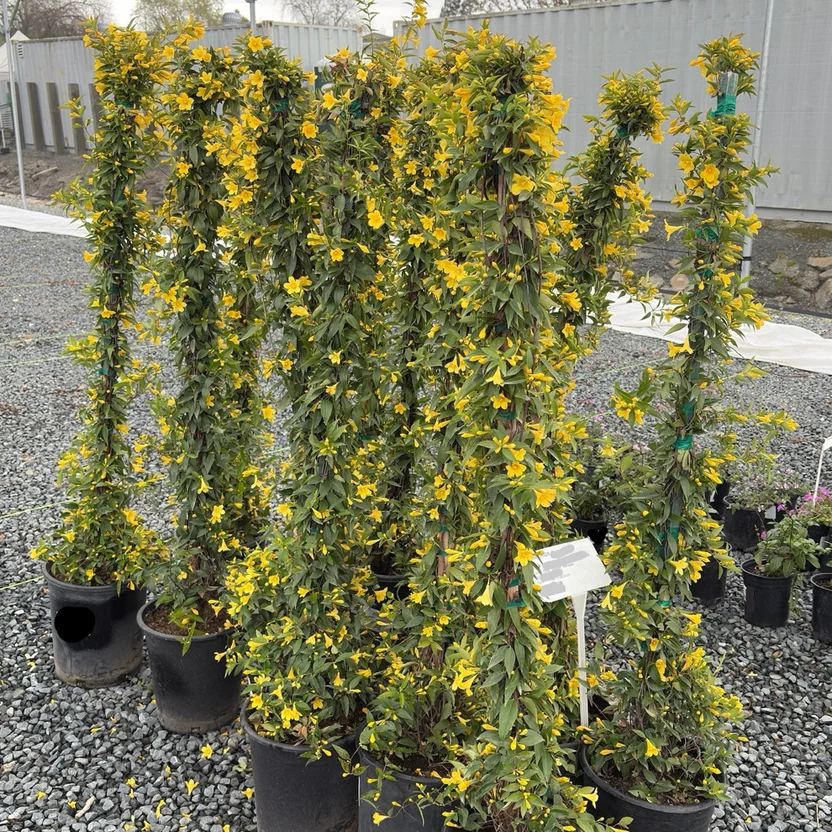
Gelsemium sempervirens is an evergreen to semi-evergreen twining vine recognized by its glossy, lance-shaped leaves and abundant fragrant, trumpet-shaped yellow flowers. It is commonly trained over trellises, fences, and arches. Despite the name jasmine, it is not a true Jasminum, and every part of the plant is poisonous if ingested.
 View Gallery
Care Overview
Light
Full sun to partial shade; flowering is most abundant with at least 6 hours of direct sunlight.
Follow species light needs for best growth.
Water
Water regularly while establishing, then water when the upper 3–5 cm of soil becomes dry. Avoid persistently waterlogged soil.
Adjust watering to pot size and season.
Temperature
Performs best at 10–29°C and generally tolerates brief frosts once established.
Avoid sudden temperature swings.
Humidity
Average outdoor humidity is suitable; good air circulation helps prevent fungal problems.
Match humidity to the plant’s native climate when possible.
Soil
Well-draining mix
Use a mix suited to the species (cactus, tropical, etc.).
Pet Safe
No. All parts are highly toxic to cats, dogs, horses, and other animals if ingested.
Highly toxic if ingested; sap may irritate sensitive skin
Detailed Care Instructions
Light and placement
Plant in full sun for the densest growth and strongest flowering. It tolerates partial shade, particularly in hot climates, but deep shade produces fewer blooms and more open, leggy growth.
Watering
Keep the root zone evenly moist during the first growing season. Once established, allow the upper 3–5 cm of soil to dry between thorough waterings. Reduce watering in cool weather and never leave a container standing in water.
Soil and drainage
Use fertile, well-drained soil that is slightly acidic to neutral. For containers, choose a quality potting mix amended with coarse bark or perlite, and ensure the pot has unobstructed drainage holes.
Feeding
Apply a balanced slow-release fertilizer in early spring, following the product rate. Avoid excessive nitrogen because it encourages foliage and stem growth at the expense of flowers.
Training and pruning
Provide a sturdy trellis, fence, or arch and loosely guide young stems onto it. Prune immediately after the main spring bloom to control size, remove tangled or damaged stems, and encourage branching without sacrificing the next flower display.
Container and winter care
Use a large, stable container because mature vines become top-heavy. Protect container-grown roots from prolonged hard freezes, and move the plant to a bright, cool, sheltered position where winters exceed its cold tolerance.
How to Propagate
- 1
Take a cutting
In late spring or summer, select a healthy non-flowering shoot and cut a 10–15 cm section just below a node. Wear gloves and keep the cutting away from children and animals.
- 2
Prepare the stem
Remove leaves from the lower half, retain two or three leaves near the tip, and optionally dip the cut end into rooting hormone.
- 3
Root in a moist medium
Insert the cutting into a sterile, free-draining mixture of perlite and peat or coco coir. Keep it warm, humid, and in bright indirect light while maintaining slight, even moisture.
- 4
Pot the rooted cutting
After roots develop, gradually reduce humidity and transplant into a small pot of well-draining mix. Acclimate the young vine to stronger light over one to two weeks.
- 5
Propagate by layering
Alternatively, bend a flexible stem to the soil, lightly wound the underside at a node, pin it down, and cover that section with soil. Separate it from the parent after a substantial root system forms.
Common Problems & Solutions
Poor flowering
CommonToo much shade, excessive nitrogen, severe pruning at the wrong time, or an undersized root system can reduce flower production.
What to do:
- Provide at least 6 hours of direct sunlight where practical.
- Use a balanced fertilizer rather than a high-nitrogen formula.
- Prune just after flowering instead of late in the season.
- Allow newly planted specimens time to establish.
Aphids and whiteflies
OccasionalSap-feeding insects may cluster on tender shoots, distort leaves, and leave sticky honeydew that supports sooty mold.
What to do:
- Rinse light infestations away with a firm stream of water.
- Remove heavily infested shoot tips.
- Apply insecticidal soap or horticultural oil according to the label.
- Encourage beneficial insects and avoid unnecessary broad-spectrum pesticides.
Root rot
OccasionalPoor drainage or chronic overwatering can cause yellow foliage, wilting despite wet soil, and dark, decaying roots.
What to do:
- Allow the upper soil layer to dry before watering again.
- Confirm that containers drain freely.
- Remove rotten roots and repot into fresh, porous medium.
- Improve drainage around plants grown in the ground.
Leaf spot
RareFungal or bacterial spotting may develop when foliage remains wet and air circulation is poor.
What to do:
- Remove and discard badly affected leaves.
- Water at soil level rather than over the foliage.
- Thin congested stems to improve airflow.
- Sanitize pruning tools between plants.
Toxicity Information & Safety Guide
Pets
ToxicAll parts are highly poisonous to cats, dogs, horses, and livestock. Even a small ingestion may cause serious neurological, cardiovascular, or respiratory effects.
Symptoms:
- Drooling, nausea, or vomiting
- Weakness, tremors, or seizures
- Abnormal heart rate
- Difficulty breathing or collapse
What to do:
- Prevent access to the plant and fallen material.
- Contact a veterinarian or animal poison service immediately.
- Do not induce vomiting unless instructed by a professional.
- Bring a plant sample or photograph for identification.
Children/Humans
ToxicThe plant contains potent alkaloids and must never be eaten. Flowers may be mistaken for edible honeysuckle, and ingestion can be life-threatening.
Symptoms:
- Nausea, vomiting, or abdominal discomfort
- Dizziness, weakness, or confusion
- Visual disturbance or muscle impairment
- Breathing difficulty or loss of consciousness
What to do:
- Remove plant material from the mouth and rinse gently.
- Contact a poison control center or emergency medical service immediately.
- Do not induce vomiting unless directed.
- Keep flowers and pruned material out of children's reach.
Handling
CautionRoutine contact is less dangerous than ingestion, but the sap may irritate skin or eyes. Careful handling is particularly important when pruning.
Possible effects:
- Skin redness or irritation
- Eye irritation after sap contact
- Accidental transfer from hands to the mouth
Safe practices:
- Wear gloves and long sleeves while pruning.
- Wash hands and tools thoroughly afterward.
- Avoid touching the face and eyes during handling.
- Bag clippings and keep them away from children and animals.
Frequently Asked Questions
How often should I water Carolina jessamine?
Water regularly while establishing, then water when the upper 3–5 cm of soil becomes dry. Avoid persistently waterlogged soil.. Adjust watering to pot size and season.
What light does Carolina jessamine need?
Full sun to partial shade; flowering is most abundant with at least 6 hours of direct sunlight.. Follow species light needs for best growth.
Is Carolina jessamine toxic to pets?
No. All parts are highly toxic to cats, dogs, horses, and other animals if ingested.. Highly toxic if ingested; sap may irritate sensitive skin
How do I propagate Carolina jessamine?
Take a cutting: In late spring or summer, select a healthy non-flowering shoot and cut a 10–15 cm section just below a node. Wear gloves and keep the cutting away from children and animals.
What are common problems with Carolina jessamine?
Poor flowering. Too much shade, excessive nitrogen, severe pruning at the wrong time, or an undersized root system can reduce flower production.
Not sure what plant you have?
Upload a photo to PlantID — free AI plant identifier online, no app required. Get the name, care tips, and pet toxicity in seconds.
Identify a plant from a photo